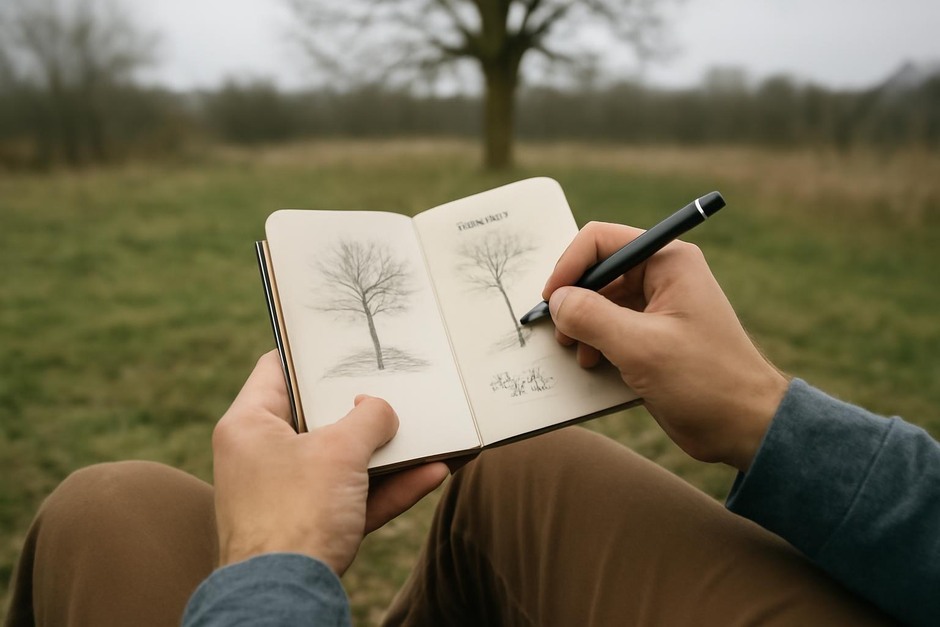
Picking one tree and following it closely for six weeks is an excellent exercise in focused observation. The aim is not to become an expert botanist but to sharpen how you notice change: buds swelling, insect visitors, soil scent after rain, light shifting across leaves. This method is compact enough to fit into busy days and structured enough to produce a small, coherent record you can revisit each year.
Step-by-step method
-
Choose your tree
Pick a single tree you can access regularly—front yard, street tree, park sapling, or a tree visible from a window. Prefer a tree that exhibits seasonal change (flowering, leafing, or fruiting) and that you can approach safely without trespassing.
-
Set a schedule: six weeks, three visits per week
Plan to visit three times a week (e.g., Monday, Wednesday, Saturday) for six weeks. Short visits of 10–20 minutes are enough. Consistency matters more than duration: similar times of day are helpful for comparing light and activity.
-
Assemble a small kit
Bring a small notebook, a pen, a smartphone or camera, a tape measure or ruler, and a hand lens if you have one. Optional: a soft pencil for sketches and a colored pencil for noting leaf color.
-
Begin with an opening survey
On the first visit, record tree details: species if known (or a descriptive label), estimated height and trunk circumference at chest height, dominant branch structure, and surrounding context (pavement, fence, nearby plants). Take two photos: a wide shot and a detail of the crown or buds.
-
Use a simple, repeatable entry format
For each visit, record the date, time, weather, and one-sentence location note. Then make four quick observations: 1) Buds/leaves/flowers status, 2) Surface notes (bark, sap, wounds), 3) Visitors and sounds (birds, bees, human activity), and 4) Ground layer (seedlings, mushrooms, leaf litter). Add a short sketch or a photo and one interpretive note—an educated guess or a question.
-
Take a small measurement each visit
Pick one repeatable metric: count the number of open flowers on a reachable branch, measure the width of a specific leaf, or note the number of new leaves on a twig. Use the same branch or spot each visit so the sequence is comparable.
-
Record sensory details and behavior
Spend two minutes with your senses: smell the base of the tree after rain, listen for insect movement, brush a leaf between fingers for texture, feel the bark temperature. These notes often capture subtle phenological changes that photographs miss.
-
Wrap up with a short synthesis
Close each entry with one concluding line: a pattern you noticed, a new question, or a quick comparison to the previous visit. After two weeks, skim your entries and note any emerging trends.
Variations
-
Potted tree or bonsai
Follow the same schedule but focus more on root collar, pot moisture, and pruning marks. Measurements can be leaf length and soil moisture tests.
-
Street or park tree where approach is limited
Use consistent vantage points for photos and binoculars for crown observations. Focus on canopy outline, visible buds, and the tree’s interaction with urban life (dogs, litter, passersby).
-
Shorter or longer timeframes
Condense to three weeks with daily micro-observations for rapid changes (e.g., flowering) or extend to a full season by repeating six-week cycles at intervals.
-
Group project
Coordinate with neighbors: each person visits on different days and shares notes. This expands temporal coverage while keeping individual visits short.
Troubleshooting
-
Missed visits
If you miss a scheduled day, make a short catch-up note describing the gap and any notable changes. Over time, gaps become data too—record weather and reason for absence so you can interpret jumps in the record.
-
Inconsistent photos or lighting
Choose a fixed angle and distance for your photos and note them in your first entry. If lighting varies, rely on sketches and notes for color and texture; photos still help with form and position.
-
Uncertain identification
It’s fine not to know the species. Use descriptive labels (“big-leaf tree by mailbox”) and focus on change rather than names. If needed, take a few diagnostic details (leaf shape, bark texture) and treat identification as a secondary task.
-
Privacy or access issues
For trees on private property, get permission. If access is restricted, observe from a public edge and note limitations; many meaningful observations can be made from a sidewalk or window.
-
Feeling unsure how to interpret changes
Make tentative notes rather than firm conclusions. Questions like “Why fewer flowers here?” are useful—over time patterns and context (weather, pests, pruning) will clarify causes.
At the end of six weeks you will have a modest but rich portrait of a single living thing: entries, measurements, photos, and sketches you can compare next season. The discipline trains attention—what starts as a small project often becomes a preferred way to notice ordinary change in ordinary days.