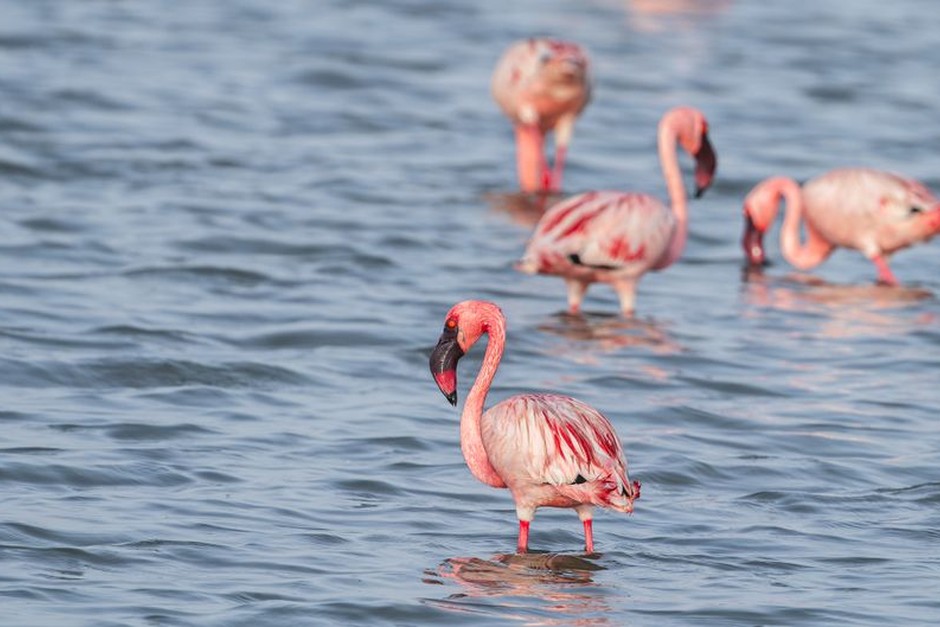
Birdwatching can become surprisingly competitive with itself. A field guide turns into a checklist, a walk becomes a search for the next species, and the simple pleasure of standing still gets replaced by the feeling that something more interesting must be just beyond the next bend.
For a slower morning, leave the tally in your pocket for the first half hour. The aim is not to identify everything. It is to notice how a place behaves when you stay long enough to see patterns.
Listen before you start looking
When you arrive, stand still for a minute. Sound gives structure to a landscape that can look empty at first glance. Repeated calls reveal where birds are holding territory, rustling leaves suggest feeding, and sudden silence can be as informative as noise.
You do not need to know every call. Direction is already useful. Turn toward a sound, notice whether it is high or low, regular or irregular, solitary or answered from somewhere else. Identification can come later.
Watch the edges
Open sky is dramatic, but many useful observations happen where one habitat meets another: reeds at the edge of water, a hedge beside a field, the line between shade and sun, or the upper branches where a tree meets clear air.
Birds use these boundaries for cover, feeding and movement. Rather than scanning everywhere at once, choose one edge and let your eyes rest there. Movement becomes easier to detect when the background stays consistent.
Let behavior be the interesting part
A common bird doing something specific can be more memorable than a rare bird glimpsed for two seconds. Watch how long an individual stays in one patch, what it picks up, how it reacts when another bird arrives, or whether a flock moves together or in loose waves.
These small actions turn an identification into a scene. They also make it easier to remember what you saw later, because the bird is attached to a behavior rather than a name alone.
Use binoculars after the first glance
Binoculars are best when they answer a question you already have. First locate the bird with your eyes, then raise the binoculars without looking away from that point. Check the details that matter — shape, color patches, bill, legs — and lower them again. Spending the entire morning through lenses can make it harder to understand the wider movement of the place.
Write down the weather too
A tiny note about wind, light and temperature gives context to what you observed. On another visit, you may notice that a sheltered corner becomes busy when the rest of the water is windy, or that certain trees are active only after the sun reaches them.
Finish the hour without worrying about a final count. One clear memory — a flock turning together, a call answered across the water, a bird returning repeatedly to the same branch — is enough. The value of a slow morning outside is not how much you collected. It is how much of the place you actually noticed.